
Mastering the Four Main Competitive Swim Strokes
Why Learning Different Strokes for Swimming Sets Your Child Up for Success
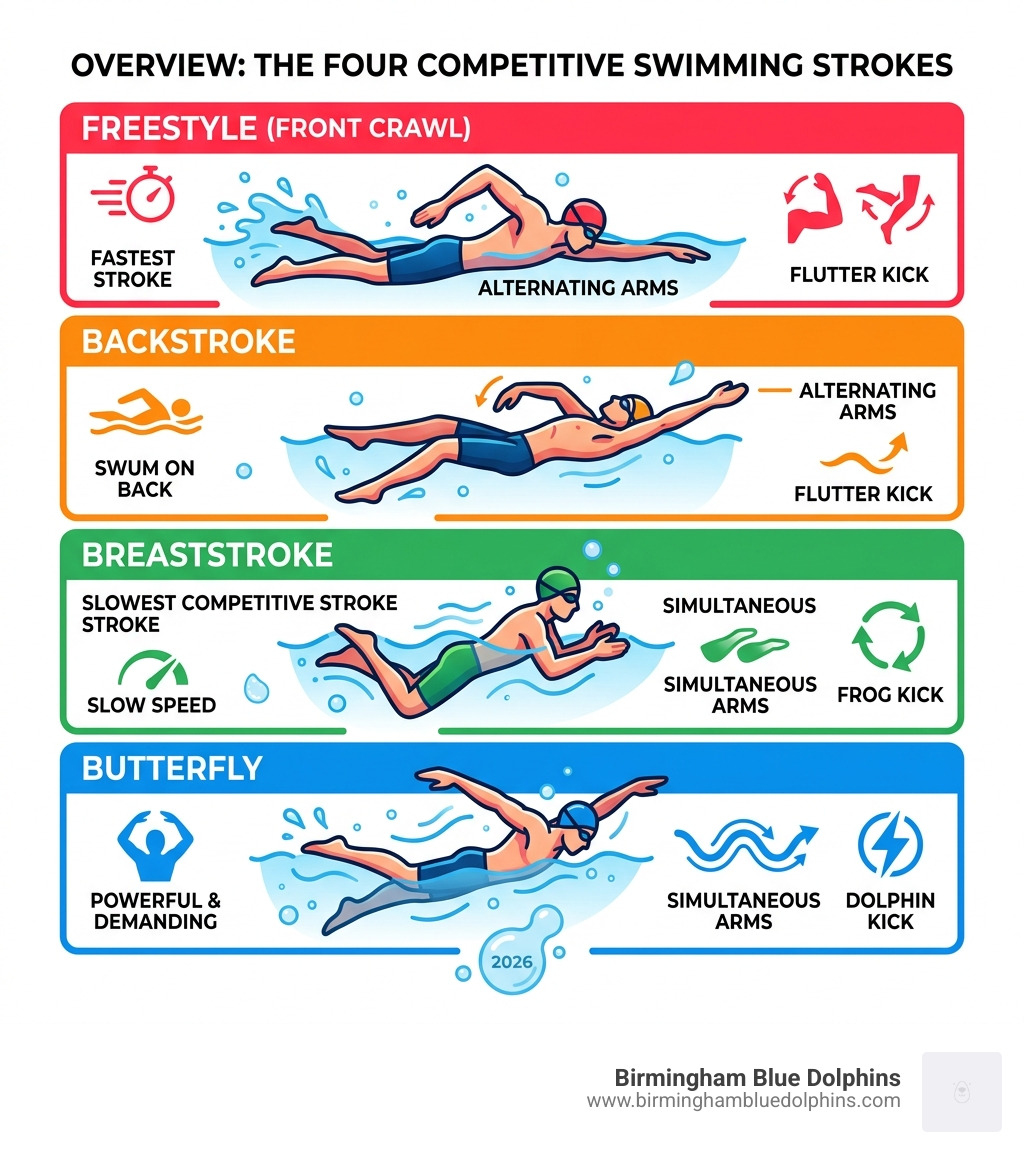
Different strokes for swimming include four main competitive styles recognised in Olympic competition, plus several practical strokes used for safety and fitness. Here is a quick overview:
- Freestyle (Front Crawl) – the fastest stroke; alternating arms with a flutter kick
- Backstroke – swum on the back; alternating arms with a flutter kick
- Breaststroke – the slowest competitive stroke; simultaneous arms with a frog kick
- Butterfly – powerful and demanding; simultaneous arms with a dolphin kick
Non-competitive strokes include the sidestroke, elementary backstroke, combat sidestroke, and the trudgen.
Whether your child is just getting comfortable in the water or already racing at club level, knowing which stroke does what makes a huge difference. Each stroke builds different muscles, teaches different breathing patterns, and opens up different opportunities — in competition, in fitness, and in water safety.
Think of swimming strokes like tools in a toolbox. A child who only knows one stroke is working with one tool. A child who knows several has options — and that confidence carries far beyond the pool.
At Birmingham Blue Dolphins, we believe every swimmer benefits from understanding all the major styles, not just the one they practise most. This guide breaks down each stroke clearly, so you can support your child’s progress without needing a coaching degree.
The Four Main Competitive Swimming Strokes
In competitive aquatics as of April 2026, swimming is categorized into two primary movement patterns: alternating strokes and undulating strokes. Alternating strokes, like freestyle and backstroke, involve arms moving one after the other. Undulating strokes, like breaststroke and butterfly, require the body to move in a wave-like motion with both arms moving simultaneously.
Understanding these different strokes for swimming is the first step toward technical mastery. To help you visualize how they stack up, we’ve put together a quick comparison:
| Stroke | Speed | Kick Type | Olympic Distances |
|---|---|---|---|
| Freestyle | Fastest | Flutter Kick | 50m, 100m, 200m, 400m, 800m, 1500m |
| Backstroke | 3rd Fastest | Flutter Kick | 100m, 200m |
| Butterfly | 2nd Fastest | Dolphin Kick | 100m, 200m |
| Breaststroke | Slowest | Frog Kick | 100m, 200m |
For a deeper dive into how these styles vary, you can explore this resource on Comparing and Contrasting: The Four Main Swimming Strokes.
Freestyle: The Fastest of the Different Strokes for Swimming
Freestyle, technically known as the “front crawl,” is the undisputed king of speed. It is the most efficient way for a human to move through water. In competitive swimming, “freestyle” actually means a swimmer can use any stroke they like, but because the front crawl is so much faster than anything else, it is the only one you will see used.
The mechanics rely on a high-elbow recovery and a continuous flutter kick. The goal is to minimize drag by keeping the body as flat and streamlined as possible. The power comes from the “catch”—where the hand enters the water and pulls back—and the rotation of the hips.
Key Stats:
- Speed: The men’s world record for the 50m freestyle is a blistering 20.91 seconds.
- Distances: It is contested in more Olympic events than any other stroke, ranging from the 50m sprint to the 1500m “mile.”
- Relays: Team events include the 4x100m and 4x200m freestyle relays.
Backstroke: The Upside-Down Sprint
Backstroke is unique because it is the only competitive stroke swum on the back. This offers a major advantage—you can breathe whenever you want! However, it presents a navigational challenge: you can’t see where you are going.
Competitive swimmers use “ceiling spots” (marks on the roof of indoor pools) or the overhead backstroke flags (placed 5 meters from each wall) to know when to turn. It was first introduced as an Olympic event at the 1900 Paris Games. Like freestyle, it uses an alternating arm motion and a flutter kick, but the power is generated from a deep shoulder rotation.
Breaststroke: The Technical Challenge
Breaststroke is often the first stroke children learn, yet it is the most technically difficult to master at a high level. It is the slowest of the four Olympic strokes because the recovery of the arms and legs happens largely underwater, creating significant drag.
The rhythm is often described as “Pull, Breathe, Kick, Glide.” The “frog kick” (or whip kick) provides the majority of the propulsion. It made its independent Olympic debut in 1908. In competition, swimmers must touch the wall with both hands simultaneously during turns and finishes—a rule that leads to many disqualifications for the unwary!
Butterfly: Power and Rhythm
Butterfly is perhaps the most spectacular of the different strokes for swimming. It evolved from breaststroke in the 1930s when swimmers realized that recovering their arms over the water was faster. It became an official Olympic stroke at the 1956 Melbourne Games.
The stroke requires incredible core strength and perfect timing. Swimmers use a “dolphin kick,” where the legs move together in a whip-like motion, mimicking a mermaid or dolphin tail. Legend Michael Phelps made this stroke famous with his dominant performances. It’s all about the rhythm; if the undulation of the body is off, the swimmer will feel like they are fighting the water rather than gliding through it.
Individual Medley and Medley Relays
If a swimmer is a “jack of all trades,” they compete in the Individual Medley (IM). This is a single race where the swimmer performs all four strokes. There is a specific order that must be followed:
- Butterfly
- Backstroke
- Breaststroke
- Freestyle
In a Medley Relay, four different swimmers each take one stroke, but the order changes to accommodate the start:
- Backstroke (starts in the water)
- Breaststroke
- Butterfly
- Freestyle
The 200m and 400m IM are some of the most grueling events in the pool, requiring a balance of endurance and technical versatility.
Practical and Survival Swimming Styles
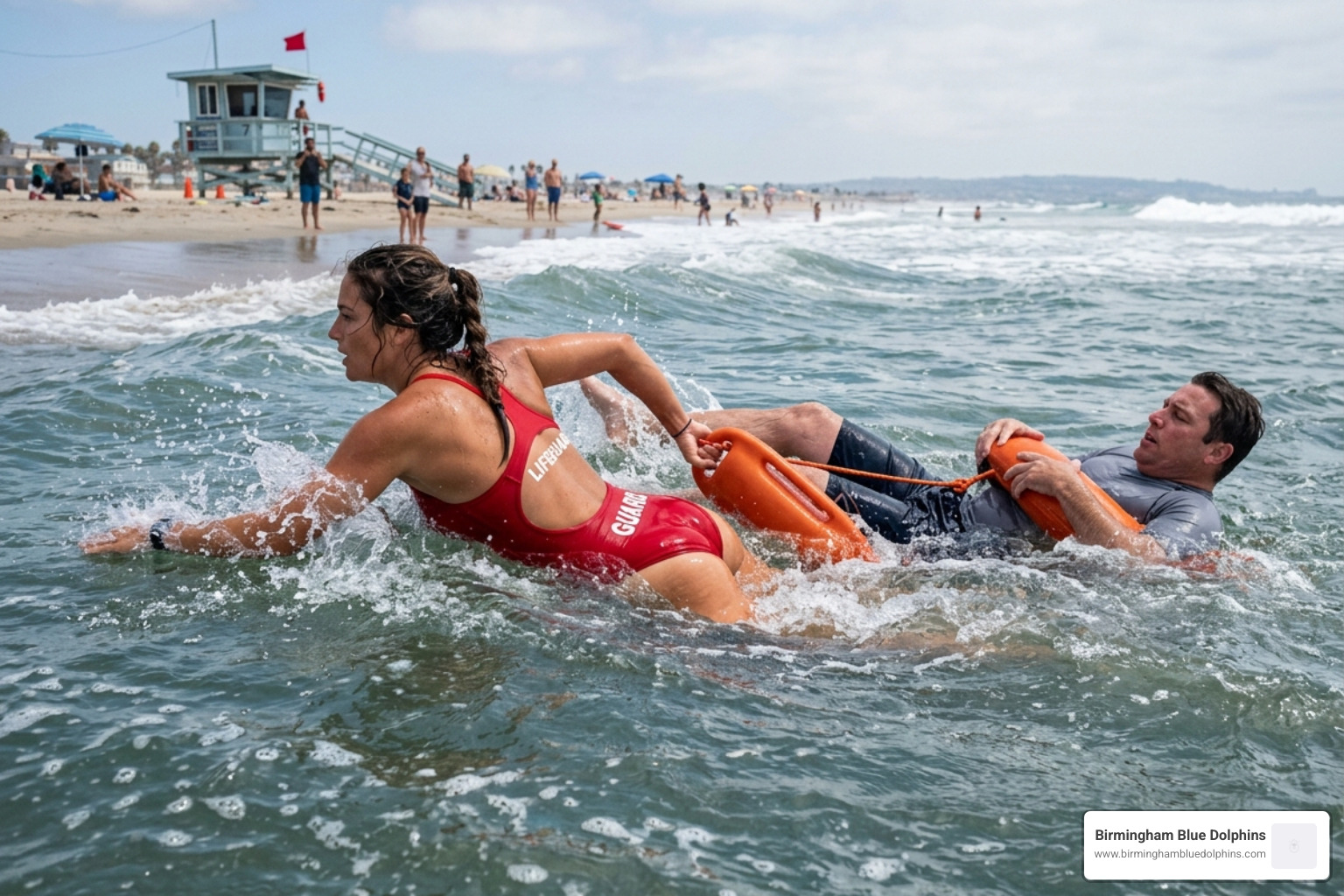
While the four competitive strokes get all the glory on TV, there are other different strokes for swimming that are essential for safety, lifesaving, and long-distance endurance. As the saying goes, Different strokes – Idioms by The Free Dictionary reminds us that different people have different needs—and in the water, those needs often include energy conservation over raw speed.
Essential Non-Competitive Different Strokes for Swimming
For beginners or those in survival situations, these strokes are literal lifesavers:
- Elementary Backstroke: Often taught using the “Monkey, Airplane, Soldier” mnemonic. It uses a breaststroke-style kick while on the back, keeping the face out of the water and conserving energy.
- Sidestroke: This is the go-to for lifeguards. By lying on one side and using a “scissor kick” and an “apple-picking” arm motion, a swimmer can keep one arm free to tow a person or carry equipment.
- Trudgen Stroke: Named after John Trudgen, this style combines the arm motion of freestyle with a sidestroke kick. It allows the swimmer to keep their head above water at all times to maintain visibility.
Combat Sidestroke and Military Applications
The Combat Sidestroke (CSS) is a specialized version of the sidestroke used by the US Navy SEALs. It is designed to be extremely efficient, low-profile, and effective when swimming with fins or heavy gear. By staying mostly submerged and using a unique pull-and-glide sequence, a swimmer can cover long distances without splashing or creating a visible wake—essential for tactical operations.
Maximizing Performance with Different Strokes for Swimming
Mastering different strokes for swimming isn’t just about moving your arms; it’s about the “invisible” parts of the race.
The 15-Meter Rule and Underwaters
In competitive swimming, you are only allowed to stay underwater for the first 15 meters after a start or a turn. This is because the “fifth stroke”—the underwater dolphin kick—is actually faster than surface swimming due to reduced surface drag. Swimmers must time their breakout perfectly to maintain that momentum.
Breathing Techniques
Breathing is the fuel for your muscles.
- Freestyle: We teach “trickle breathing,” where you exhale continuously underwater so you only have to inhale when you turn your head.
- Bilateral Breathing: Breathing to both sides in freestyle helps keep the stroke balanced and prevents shoulder injuries.
- Breaststroke: Breathing happens on every stroke, synchronized with the arm pull.
Common Mistakes to Avoid
- Over-rolling: In freestyle, rolling too far onto your side creates instability.
- Head Position: Looking forward rather than down creates drag. Your head should be in a neutral “spine-aligned” position.
- Dropped Hips: If your legs are sinking, you are essentially pulling a parachute behind you.
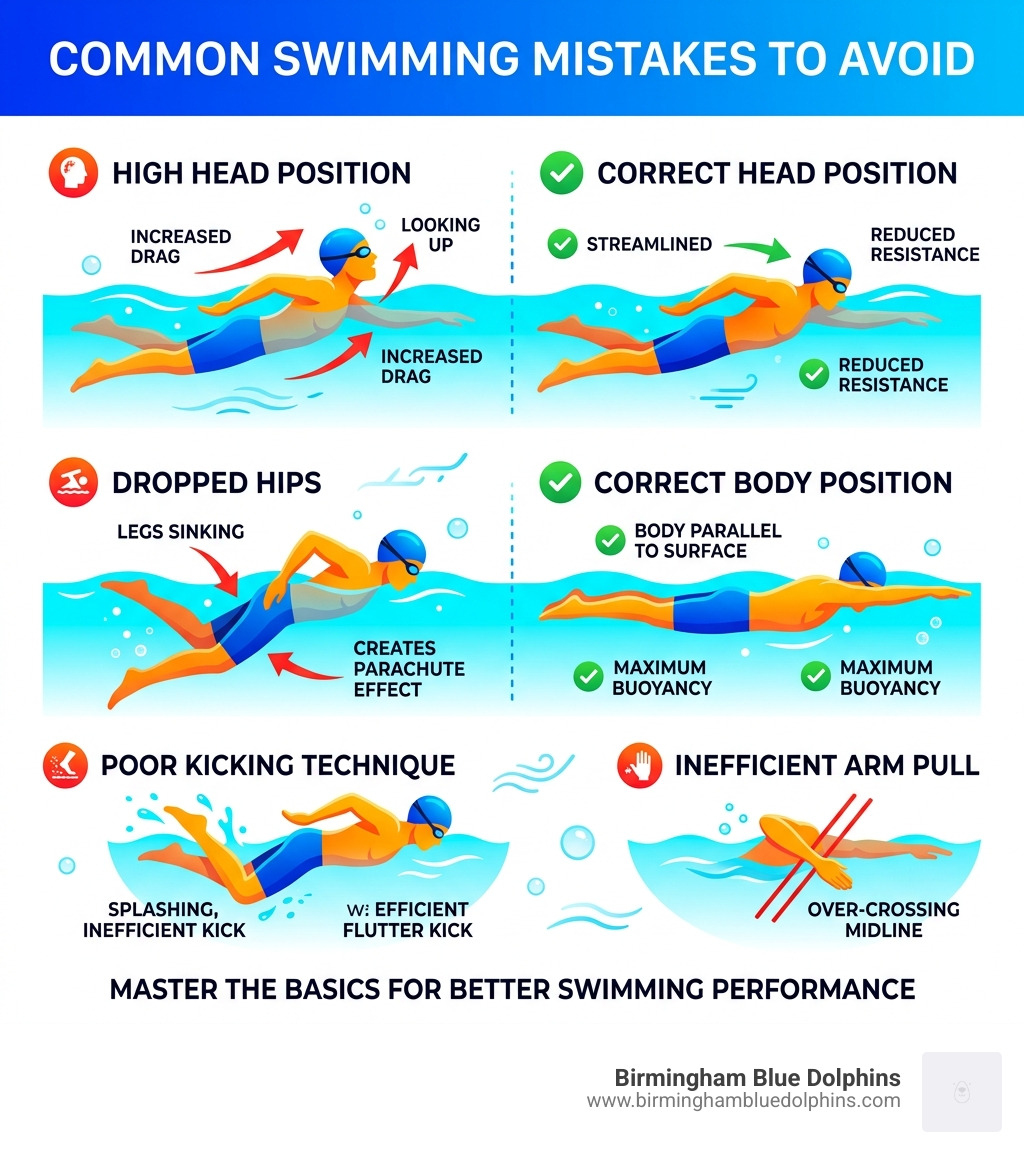
To improve, we recommend drills like the Catch-up Drill (waiting for one hand to touch the other before starting the next stroke) and Sculling (using small hand movements to feel the “pressure” of the water).
Frequently Asked Questions about Swimming Techniques
Which swimming stroke is the fastest and why?
Freestyle (the front crawl) is the fastest. It provides nearly constant propulsion because one arm is always pulling while the other recovers. Additionally, the horizontal body position and flutter kick minimize the drag that slows down other strokes like breaststroke.
What is the easiest swimming stroke for beginners to learn?
The elementary backstroke is generally considered the easiest. It allows the swimmer to keep their face out of the water (reducing panic), and the movements are symmetrical and easy to coordinate.
What are the rules for underwater swimming in competitions?
Per Olympic and FINA rules, swimmers must break the surface of the water by the 15-meter mark after every start and turn. Staying under longer results in an immediate disqualification.
Conclusion
Learning different strokes for swimming is a journey that builds more than just speed—it builds a “feel for the water” and a resilient body. At Birmingham Blue Dolphins, we are dedicated to holistic development. We don’t just teach kids how to swim; we build champions in and out of the pool by focusing on technique, wellness, and the joy of the sport.
Whether you’re looking for competitive coaching or essential water safety, our Birmingham-based team is here to help you master every lap.
